
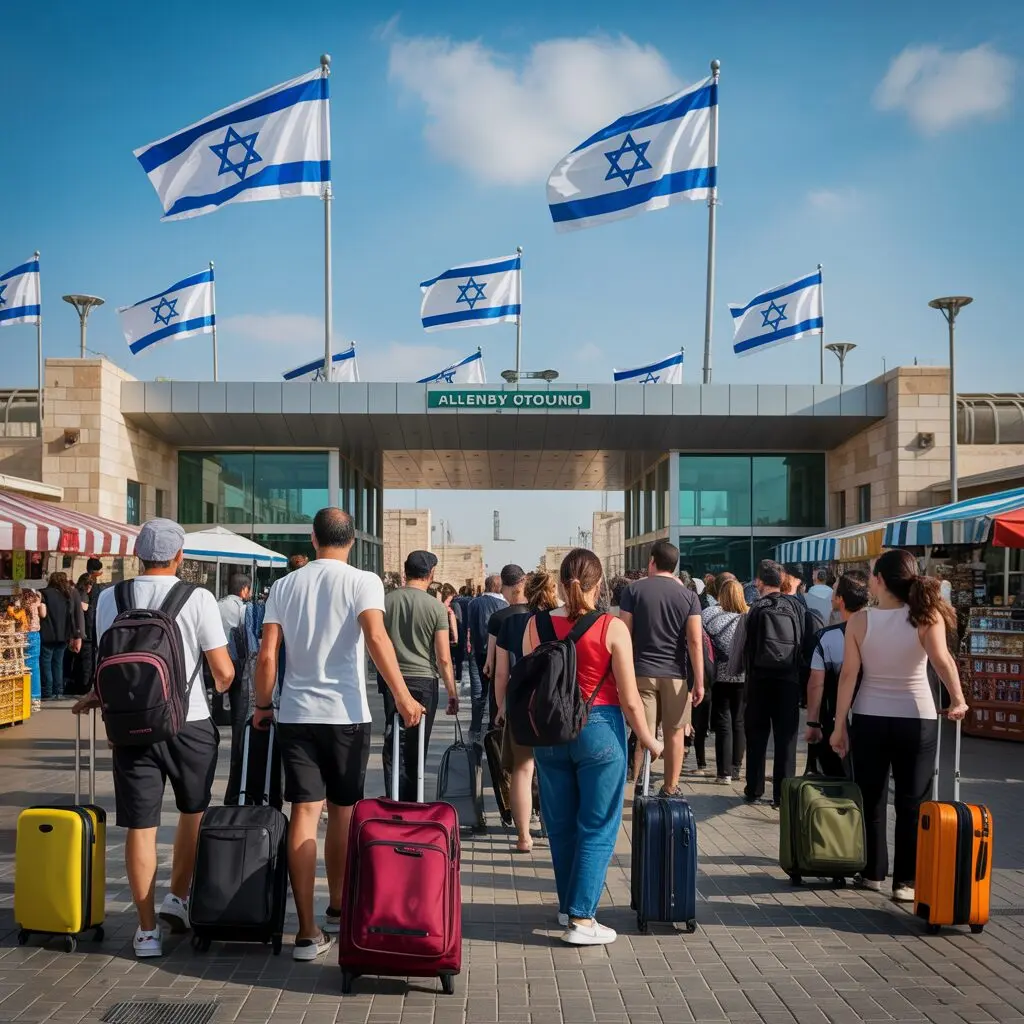
Israel Entry Requirements in 2026: An Overview
Israel has updated its entry requirements significantly since January 2025. The most important change is the mandatory eTA Israel (ETA-IL) system for citizens of visa-exempt countries. This guide covers everything you need to know about entering Israel in 2026.
The Israeli government implemented these changes to align with international standards for electronic travel authorizations, improve border security, and streamline the entry process for legitimate travelers.
The Mandatory eTA Israel (ETA-IL)
Since January 1, 2025, all travelers from visa-exempt countries must obtain an eTA Israel before arriving. This applies to:
- Air travelers arriving at Ben Gurion Airport (TLV) or Ramon Airport (ETM)
- Land border crossings from Jordan and Egypt
- Sea arrivals at Haifa and Ashdod ports
The eTA Israel costs 25 ILS (approximately $7 USD), is valid for 2 years, and allows stays of up to 90 days per visit.
Is the eTA Israel required for transit through Israel?
Yes, if you are passing through Israeli immigration (even for a short layover), you need a valid eTA Israel. If you remain in the airport transit area without clearing immigration, you may not need one, but this depends on your specific transit arrangements. Check with your airline.
Passport Requirements
Your passport must meet the following conditions for entry into Israel:
- Validity – Must be valid for the entire duration of your stay
- Condition – Must be in good physical condition (no damaged pages, water damage, or missing covers)
- Blank pages – At least one blank page recommended for entry stamps
- Matching details – Must match the passport information on your eTA Israel
Dual Citizens
If you hold Israeli citizenship alongside another nationality, you must enter and exit Israel on your Israeli passport. You are exempt from the eTA Israel requirement.
Entry Points into Israel
Airports
Ben Gurion International Airport (TLV)
- Israel’s main international airport, located near Tel Aviv
- Handles the vast majority of international flights
- Modern facilities with automated passport control for eTA Israel holders
Ramon Airport (ETM)
- Located near Eilat in southern Israel
- Primarily serves European charter and low-cost carriers
- Growing in popularity for tourists visiting the Negev and Red Sea areas
Land Border Crossings
From Jordan:
- Allenby Bridge (King Hussein Bridge) – Most commonly used crossing
- Jordan River Crossing (Sheikh Hussein Bridge) – Northern crossing
- Arava Crossing (Yitzhak Rabin) – Southern crossing near Eilat
From Egypt:
- Taba Border Crossing – Near Eilat, popular for Sinai Peninsula visitors
Sea Ports
- Haifa Port – Cruise ships and cargo
- Ashdod Port – Cruise ships, near Tel Aviv
Can I enter Israel through any border crossing with my eTA Israel?
Yes, the eTA Israel is valid at all official Israeli entry points including airports, land borders, and seaports. Your authorization is electronically linked to your passport and recognized at all crossings.
What to Expect at Israeli Border Control
Israeli border control is known for thorough security procedures. Here is what to expect:
Before Departure
- Airlines will verify your eTA Israel before allowing boarding
- You may be asked additional security questions at check-in
- Arrive at your departure airport at least 3 hours before your flight
At Ben Gurion Airport
- Initial security screening – Brief interview about your luggage and trip
- Passport control – eTA Israel verification, passport check, entry stamp
- Baggage claim – Collect your luggage
- Customs – Standard customs declaration if required
The entire process typically takes 30-90 minutes, though it can be longer during peak times.
Common Questions at the Border
Border officers may ask:
- Purpose of your visit
- Where you are staying (hotel name and address)
- How long you plan to remain in Israel
- Whether you have visited Israel before
- Your occupation
- Who packed your luggage
Answer all questions honestly and calmly. Having your hotel confirmation and return flight details readily accessible can speed up the process.
Security Considerations
Israel takes security seriously. Be prepared for:
- Thorough luggage screening
- Questions about your travel history
- Possible additional screening if you have stamps from certain countries
- Security interviews at the departure gate (for flights to Israel)
Stamps and Travel History
Having stamps from countries that do not have diplomatic relations with Israel (such as Iran, Lebanon, Syria, Iraq, or Libya) may result in additional questioning. This does not necessarily mean you will be denied entry, but expect more detailed interviews.
Will visiting Arab countries affect my entry to Israel?
Having visited Arab or Muslim-majority countries will not automatically prevent you from entering Israel. However, it may lead to additional security questions. Be honest about your travel history and have documentation of your visits ready if asked.
Customs Regulations
Israel has standard customs regulations for incoming travelers:
- Duty-free allowance – Up to $200 USD worth of goods
- Alcohol – Up to 1 liter of spirits and 2 liters of wine
- Tobacco – Up to 250 cigarettes or 250g of tobacco
- Gifts – Items up to $200 in value
Prohibited Items
- Illegal drugs
- Weapons without proper permits
- Certain agricultural products
- Counterfeit goods
Health Requirements
As of 2026, Israel does not require:
- COVID-19 vaccination proof
- COVID-19 test results
- Specific health declarations
However, it is always advisable to check the latest health requirements before travel, as policies can change. Routine vaccinations (MMR, tetanus, etc.) are recommended for all travelers.
Travel Insurance
While not a formal entry requirement, comprehensive travel insurance is strongly recommended when visiting Israel. Medical care in Israel is excellent but expensive for uninsured visitors. Your travel insurance should cover:
- Medical emergencies and hospital stays
- Trip cancellation or interruption
- Lost or stolen belongings
- Emergency evacuation
Special Entry Considerations
Travelers with Criminal Records
Having a criminal record does not automatically disqualify you from entering Israel. However, serious offenses or security-related crimes may result in additional scrutiny or denial. The eTA Israel application includes background screening.
Previously Denied Entry
If you have been previously denied entry to Israel, you may face additional scrutiny on future visits. Consider applying for a traditional visa rather than relying on the eTA Israel, as the visa process allows you to address previous issues.
Journalists and Media
Journalists visiting Israel for work should coordinate with the Israeli Government Press Office (GPO) for media credentials. While the eTA Israel covers entry, press accreditation is separate.
Regional Travel Considerations
West Bank
Entry to the West Bank is controlled through Israeli checkpoints. Tourists can generally visit Bethlehem, Jericho, and other Palestinian cities, but be aware of:
- Checkpoint procedures
- Changing security situations
- Different legal jurisdictions
Gaza Strip
Entry to Gaza is severely restricted. Tourists generally cannot enter Gaza without special authorization.
Golan Heights
The Golan Heights is under Israeli control and accessible to tourists with a valid eTA Israel. The area is known for wine production, hiking, and historical sites.
Can I travel to the West Bank with just an eTA Israel?
Yes, tourists with a valid eTA Israel can visit Palestinian Authority-controlled areas in the West Bank, including Bethlehem and Jericho. You will pass through Israeli checkpoints. Always check current security conditions before traveling.
Practical Tips for Entering Israel
- Apply for eTA Israel early – At least 72 hours before departure
- Keep documents accessible – Hotel booking, return flight, eTA approval
- Be honest at border control – Dishonesty can result in denial
- Stay calm during security interviews – They are routine
- Know your accommodation address – Have it written down or saved on your phone
- Carry a printed copy of your eTA approval – As a backup to the electronic link
- Check travel advisories – Before and during your trip
- Register with your embassy – Many countries offer travel registration services